Digital euro meets digital receipt – efsta as a visionary

Sabrina Riedl
Rethinking the till receipt: efsta’s vision for integrated digital receipts
When we talk about the future of payments, it is usually about speed, security and convenience. But one essential part of every transaction is often overlooked: the receipt.
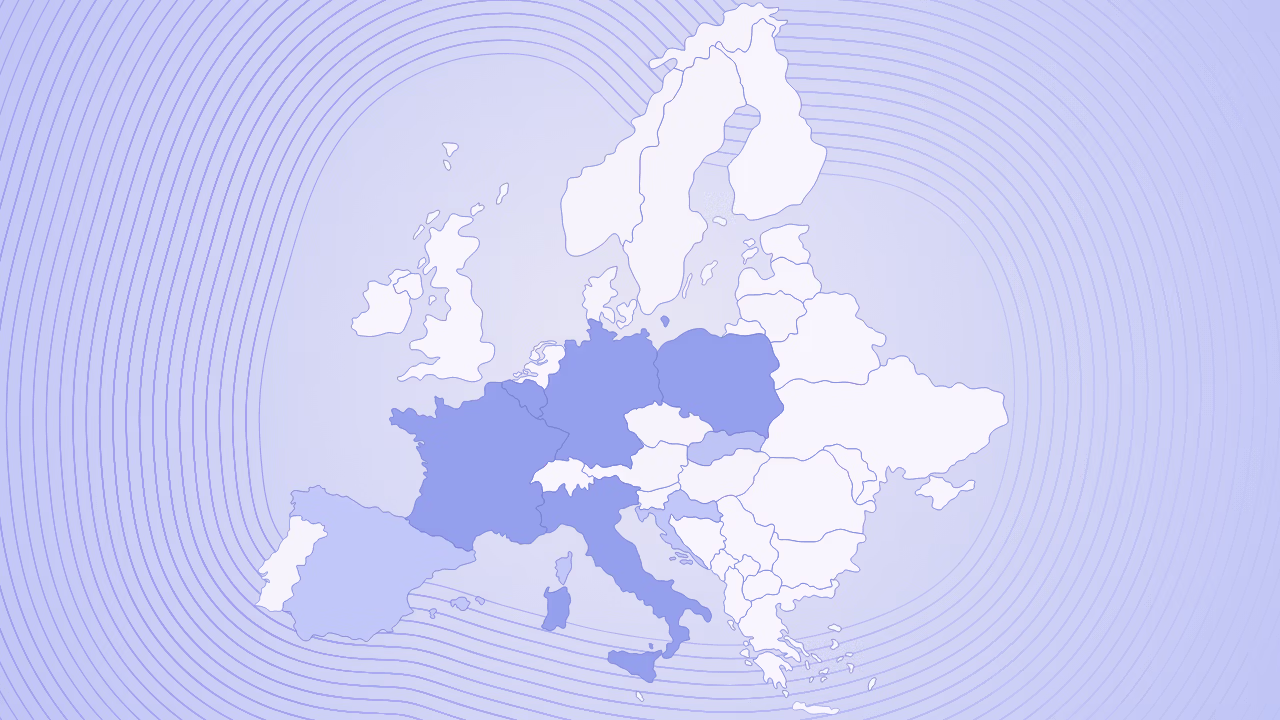
As part of the Digital Euro Innovation Platform of the European Central Bank (ECB), efsta took part as a Visionary Participant and proposed a concrete use case under section 3.2.1 “Integrated electronic receipts” of the official results report.
Our contribution aimed to rethink the receipt as a digital element of trust and transparency in the payment ecosystem: secure, verifiable and seamlessly integrated into every transaction.
More than just digital payment
The ECB’s initiative examines how a possible digital euro could go beyond simply replicating cash in digital form. It asks how it could enable innovation for consumers, retailers and financial service providers.
To this end, the ECB invited “pioneers” and “visionaries” across Europe to test and develop new use cases. efsta was one of the selected visionaries, focusing on one of the most practical and impactful applications: the digital receipt.
What are integrated digital receipts?
Simply put: a receipt that is created directly in the payment process. Instead of a paper receipt or a separate e-mail, the customer automatically receives a secure, standardized digital receipt at the very moment of payment, directly linked to the digital euro transaction.

According to the ECB report, integrated receipts could:
- Provide consumers with a central, secure overview of purchases, returns and warranties.
- Help retailers optimize processes, reduce administrative costs and avoid paper waste.
- Strengthen data protection: receipts are encrypted and stored in certified archives. Only buyers and sellers have access, not intermediaries or the Eurosystem.
- Create environmental benefits by reducing paper and chemical waste.
Why this matters to efsta
efsta has been working on digital receipt infrastructures and fiscal data security for many years, long before the ECB initiative started. Participating as a visionary gave us the opportunity to show how our experience in secure, standardized receipt management can contribute to a pan-European payment system.
The integrated digital receipt creates added value in several dimensions:
- Seamless customer experience: instant, organized access to receipt data, no lost slips, no manual archiving. Especially useful for business travel, returns and warranties.
- Efficiency for retailers: digital receipts automate refunds, reconciliations and audits. Less paperwork, fewer errors, faster service.
- High-quality transaction data: structured, standardized receipts provide machine-readable data for analytics, loyalty programs and ESG reporting.
- New business models: digital receipts can become a gateway to innovation: product registration, bonus linking, integrated insurance or CO₂ transparency.
- Cross-border integration: within the digital euro ecosystem, harmonized standards could ensure that one receipt format works in all euro countries – a real step forward for European trade.
efsta’s contribution to the ECB platform
In the Visionary track, our team proposed an architecture for the “receipt as a digital unit”, embedded directly in the payment flow of the digital euro.
Key elements:
- Automatic issuing of a verified digital receipt for every transaction, cryptographically linked to the payment.
- Privacy by design: buyers and sellers can access or share the data.
- Integration standards via open APIs to connect retailers, payment service providers and wallets.
- Modeling of scenarios for returns, warranty validation and archive management – directly integrated into the framework.
Significance for the market
The ECB report emphasizes a crucial point: innovation does not come from the Eurosystem itself, but from the market.
This opens up opportunities for companies like efsta to actively shape the next generation of digital payment infrastructure.
For the industry, this means:
- Preparing for standardized data exchange between payments, receipts and accounting systems.
- Data protection and compliance as a basic principle.
- Understanding the digital receipt not as a cost factor, but as a source of efficiency, insight and sustainability.
- Collaborating across sector boundaries to achieve integration – from FinTechs and retailers to regulators and hardware providers.
Conclusion
Our participation in the ECB’s Digital Euro Innovation Platform shows how a seemingly small element, the digital receipt, can mean a big step in the world of digital finance. The official report is available here.
For efsta, the digital receipt is more than just a proof of transaction: it is the bridge between payment, compliance and customer experience.
It embodies what the digital euro is meant to achieve:
- Transparency
- Trust
- Innovation
efsta is working on the future of digital receipts and fiscal data infrastructures in Europe and is already shaping the standards of tomorrow. For more information, the efsta team is happy to help.
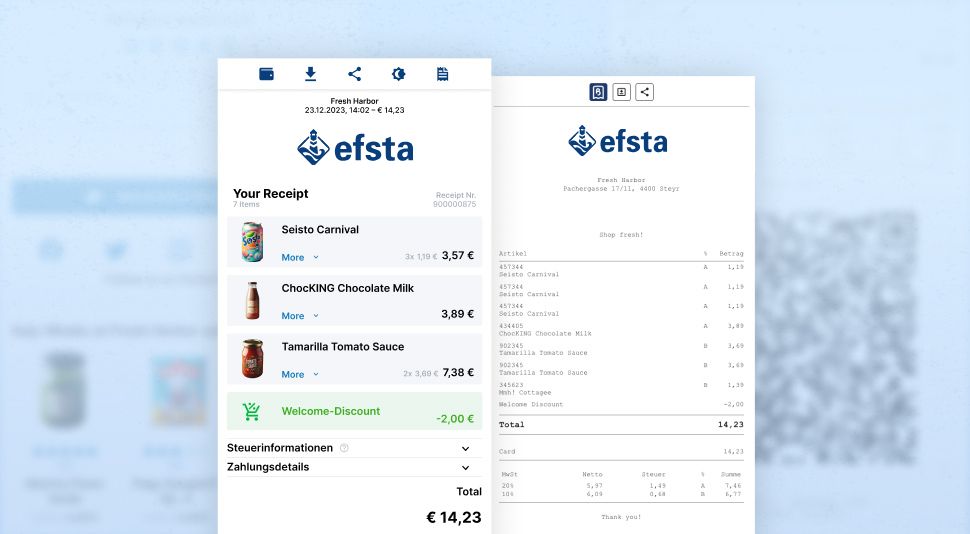
With the efsta Digital Receipt, paperless receipts are already a reality today.